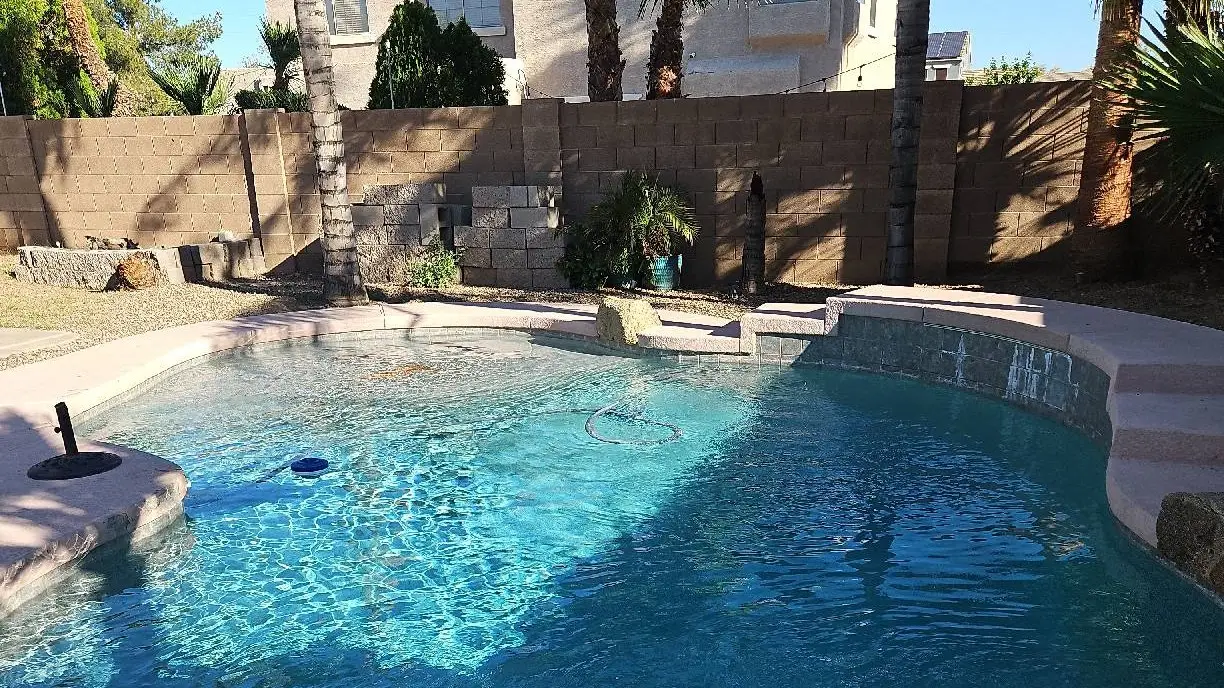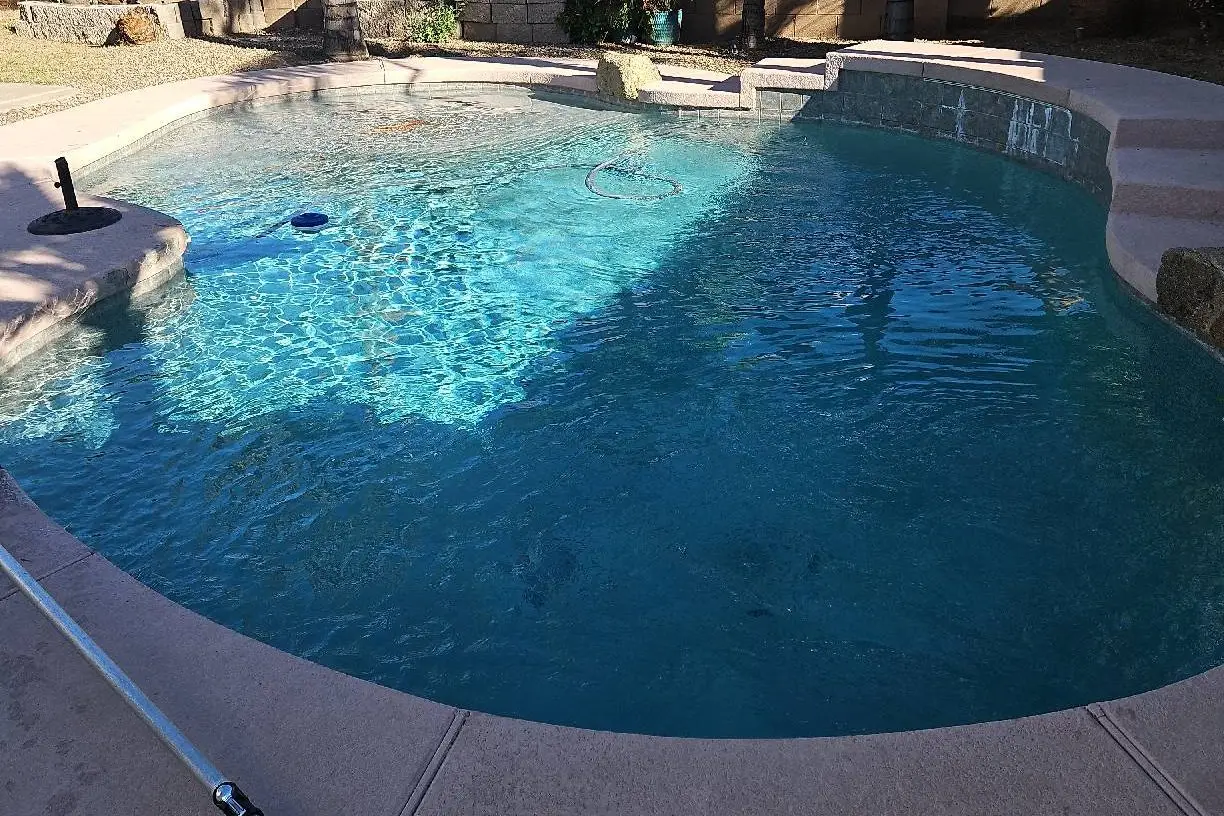
Most Tempe pools don’t fail all at once. The plaster gets rough, a few tiles let go, and the water drops a little faster than it should. At some point you start to wonder if the pool needs a remodel or just a good repair. The answer depends on which of the signs below you’re seeing, and how many show up together.
Why Tempe Pools Wear Out Faster Than You’d Expect
Two things work against a Tempe pool: the water and the heat. The city’s 2025 water quality report put average hardness at 211 ppm, or about 12.3 grains per gallon. Some samples ran as high as 557 ppm. As pool water evaporates, those minerals stay behind and settle on your tile and plaster.
The heat speeds that up. Phoenix averages 111 days a year at or above 100°F, according to the National Weather Service, and 2025 hit 122. More evaporation means more top-offs, so more minerals end up in the pool every month.
Age is the last piece. Plenty of Tempe neighborhoods, from Broadmor to Warner Ranch, were built decades ago. As a result, many of those pools are on their first or second finish. If you’d like a second opinion on yours, our Tempe pool service team can take a look.
6 Signs Your Tempe Pool Needs a Remodel (or Something Smaller)
Some wear is normal. Each sign below comes with a quick check you can do yourself, plus the fix it usually leads to. A single sign rarely calls for a full remodel.
1. Rough or Etched Plaster
If the floor feels like sandpaper on your feet, or swimsuits snag on the walls, the plaster is etched. The National Plasterers Council defines etching as the removal of material from within the surface. In plain terms, the water has been eating the plaster.
That happens when the water runs low on calcium, pH or alkalinity for long stretches. Our post on hard water and plaster etching explains the chemistry, and it applies to Tempe water too.
Quick check: Run your palm along the wall about a foot below the waterline. Smooth means you’re fine. Gritty means the surface is wearing. If the steps and benches scrape skin, it’s past due.
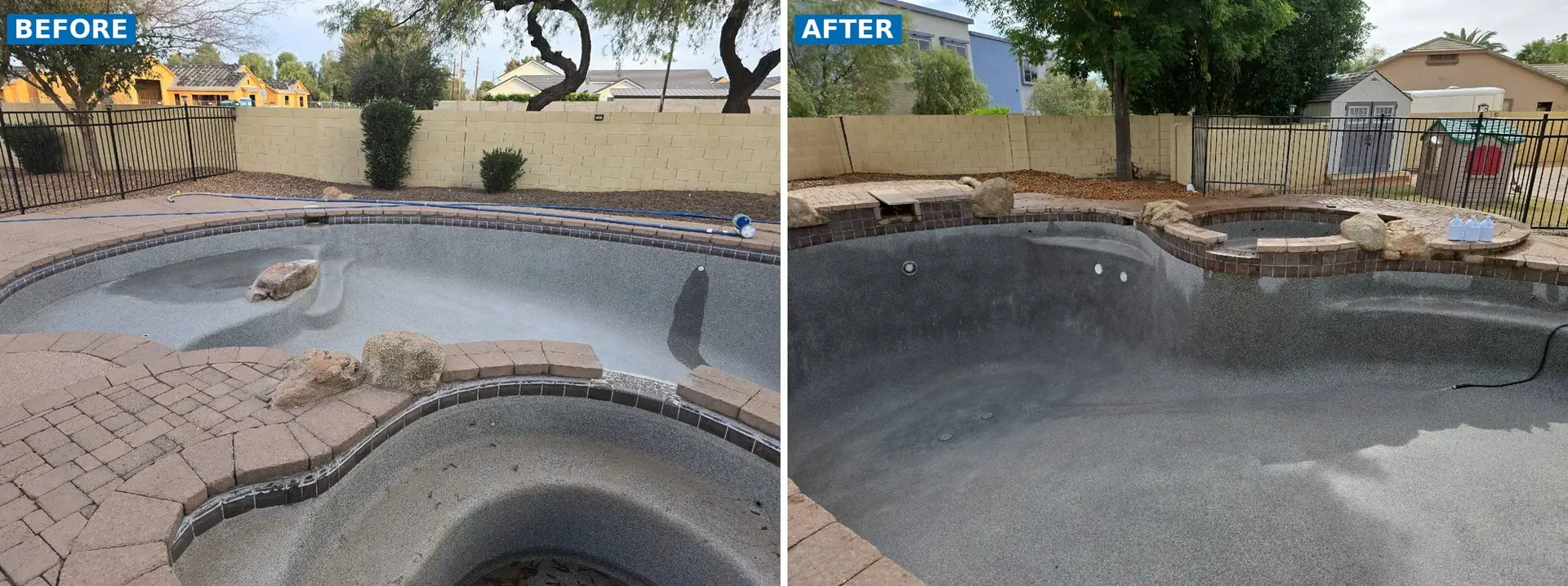
Before and after a resurface on a Blue Lagoon job.
2. Stains That Keep Coming Back
Dark mottling and rust spots that won’t move with a brush are stains in the plaster, not on it. SGM, the company behind Diamond Brite finishes, lists persistent dark mottling and calcium nodules among the signs a surface is near the end of its life.
Quick check: Brush a stained spot hard, then look at it again the next day. If it’s still there, the stain has set into the finish.
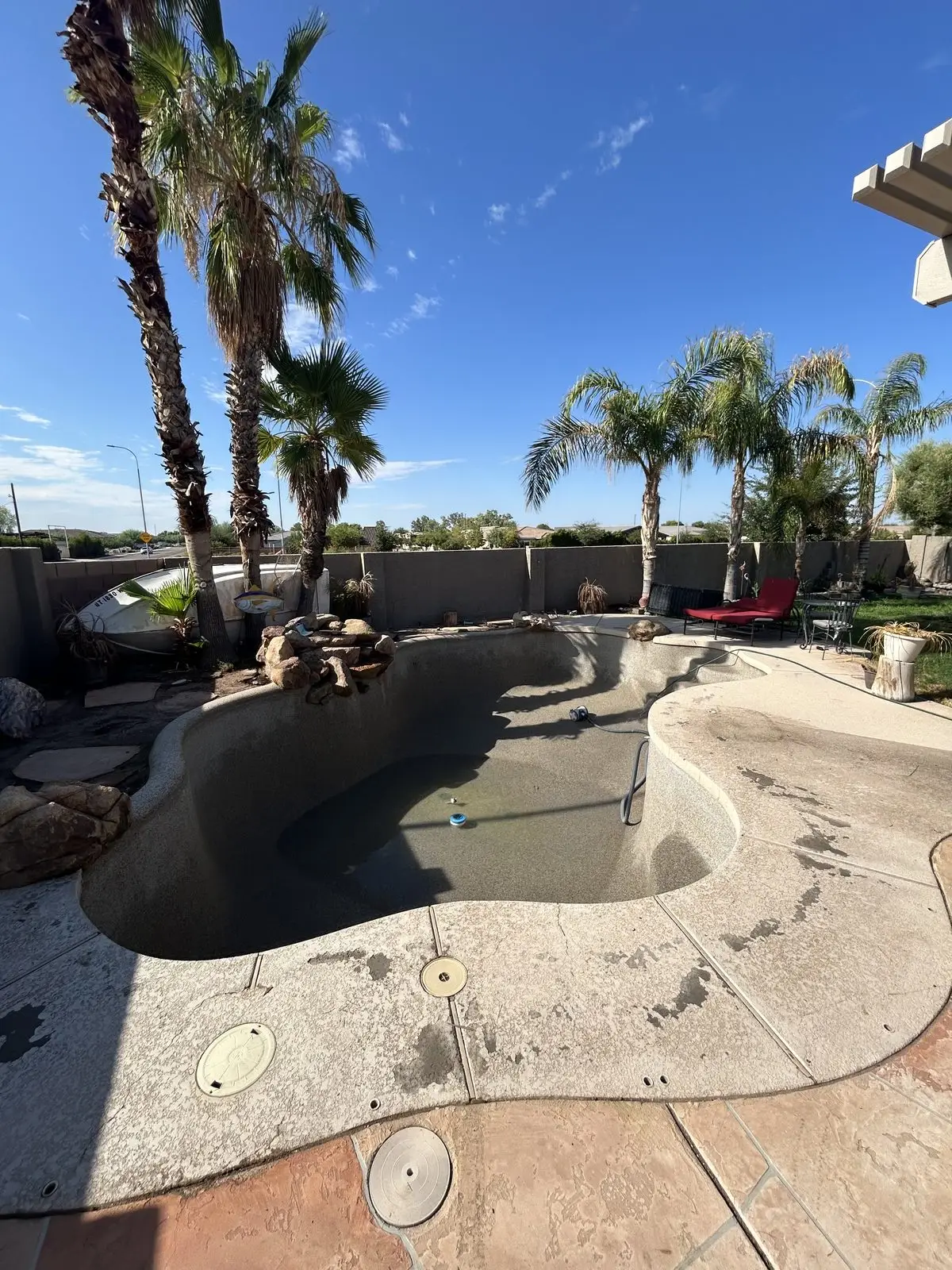
A pool right after an acid wash in Gilbert.
3. Hollow Spots, Blisters or Flaking
Delamination is when the finish separates from the layer underneath it. You’ll see raised, blister-like bumps, or flakes peeling away near the steps and waterline. Once it starts, it tends to spread.
Quick check: When the pool is drained, tap the surface with the handle of a brush. Solid plaster sounds sharp, but delaminated plaster sounds dull and hollow, almost like a drum.
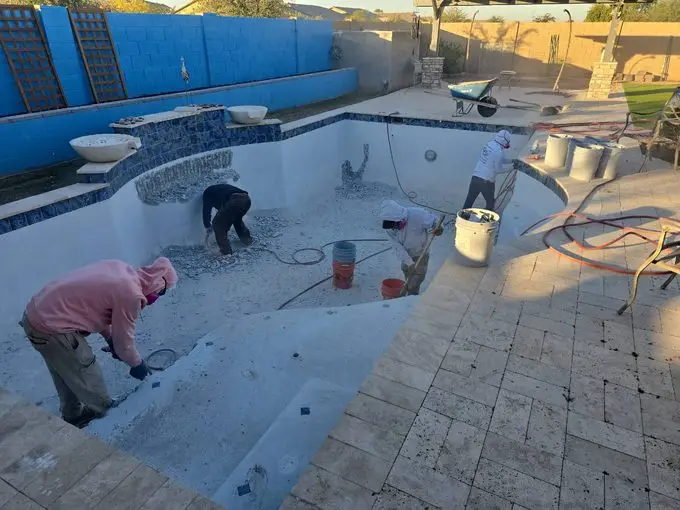
Old plaster chipped out before a new finish goes on in Tempe.
4. Cracked, Loose or Missing Waterline Tile
Waterline tile takes a beating here. Calcium crust bonds to the grout and the sun bakes the edge, so tiles start to pop loose. A white crust on its own is a cleaning job. Our pool tile cleaning takes it off, and our guide to removing calcium from pool tile shows how to keep it from coming back.
Missing grout and tile pieces in the skimmer are a different story. Once a tile cracks, water can get in behind it and work on the shell.
Quick check: Press along the tile line with your thumb, then count the tiles that move or sound hollow.
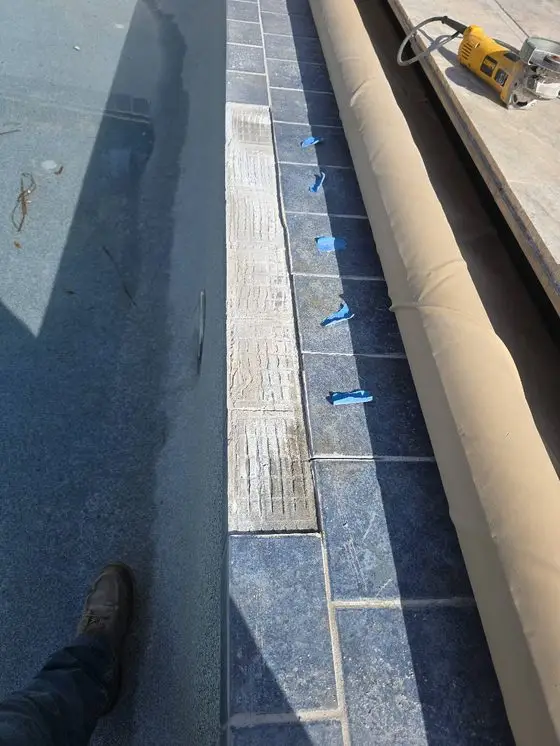
Worn waterline tile on a Tempe pool.
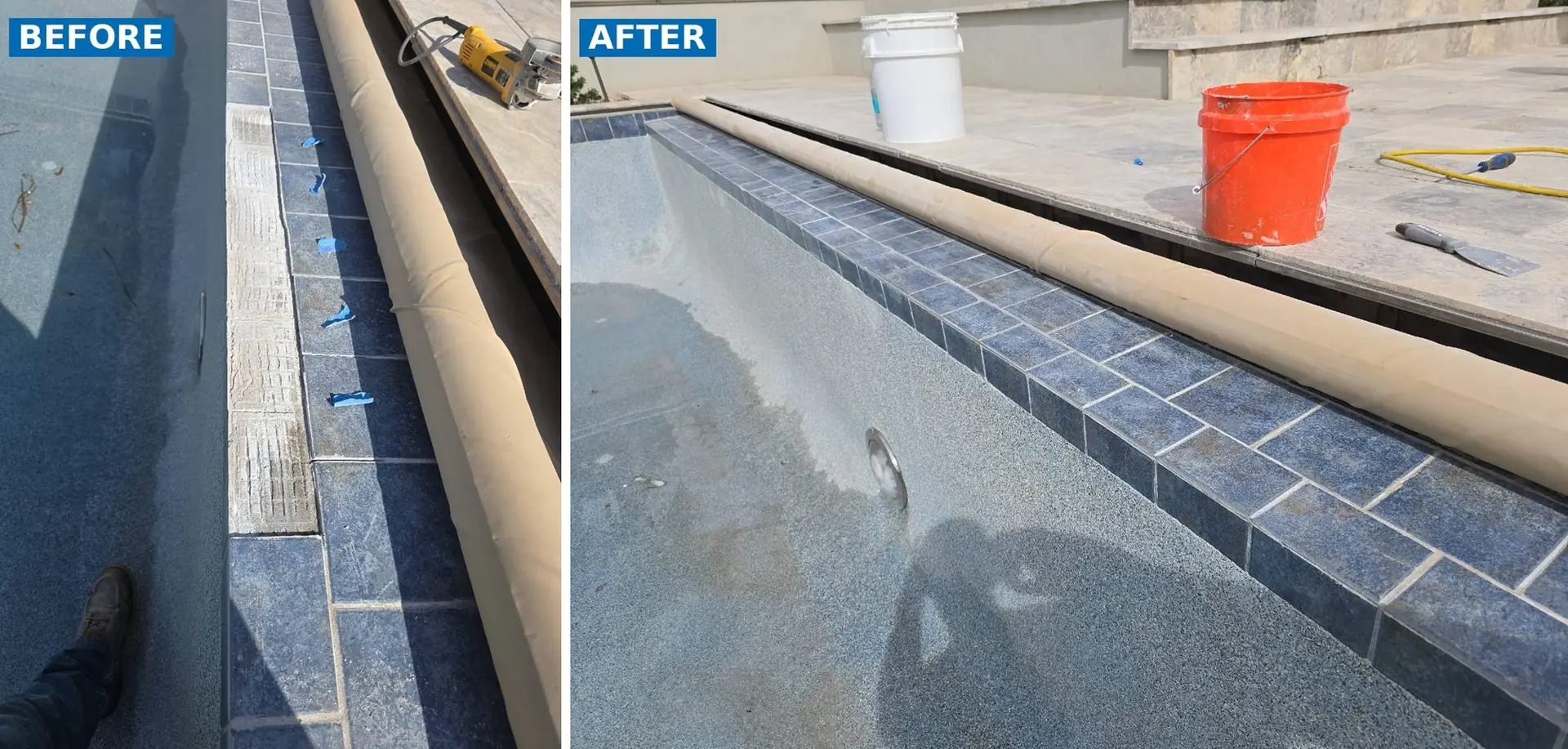
Waterline tile repair, before and after, on a Blue Lagoon job.
5. A Leak You Can’t Chase Down
Tempe pools lose a lot of water to evaporation, so a dropping level isn’t proof of a leak. The bucket test settles it.
Quick check: Set a bucket on the first step and fill it to the same level as the pool. Next, mark both lines, turn off the auto-fill, and check again after 24 hours. If the pool dropped more than the bucket, you have a leak.
6. A Cracked Deck, Worn Coping or a Dated Layout
Sun-baked decking cracks and lifts, and coping stones work loose. Sometimes nothing is broken at all. The pool just doesn’t fit how you use the yard anymore, like a deep end nobody swims in and no shallow spot for kids.
Quick check: First, walk the deck barefoot. Lifted edges, wide cracks and loose coping are trip hazards as well as eyesores.
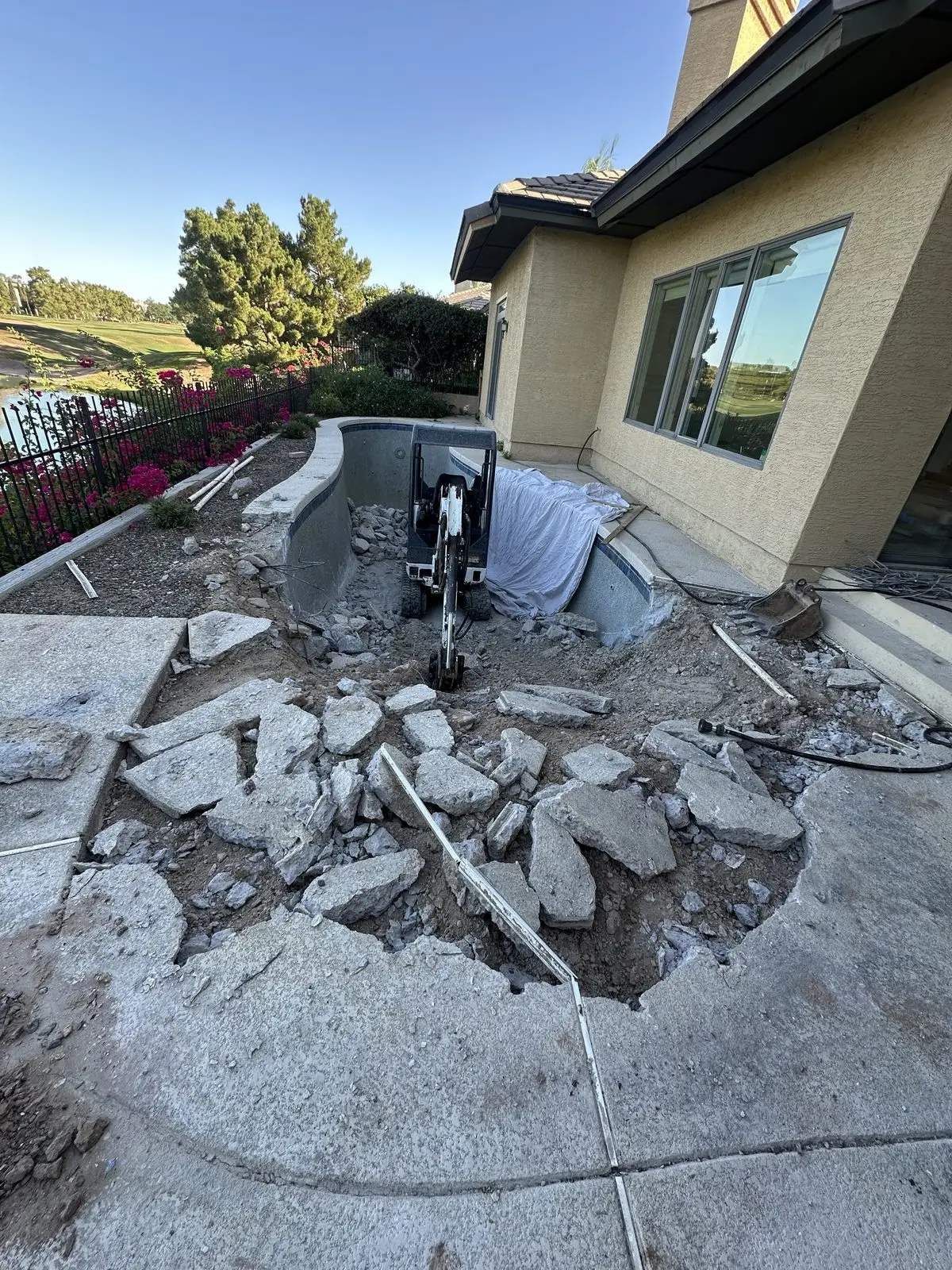
Deck tear-out at the start of a full remodel on a Blue Lagoon job.
Resurface or Remodel? How to Make the Call
Once you know which signs you have, the decision gets simpler. Here’s how each problem usually maps to a fix, with published Phoenix-area costs where they exist.
| What you’re seeing | Usual fix | Typical cost | Pool out of use |
|---|---|---|---|
| White scale on the tile line | Tile cleaning | Quoted per job | Pool stays full |
| Stains or light roughness | Acid wash | Quoted per job | A few days |
| A few loose tiles or a small hollow spot | Repair | Quoted per job | Depends on the repair |
| Widespread etching, delamination, or stains after past acid washes | Resurface | $6,198 to $15,495 | About 1 to 2 weeks, drain to refill |
| Failing tile along most of the waterline | Retile, usually with a resurface | About $1,500 to $6,500 | Adds a few days |
| Cracked deck, loose coping or a dated layout, plus surface wear | Full remodel | About $25,000 to $65,000 | About 2 to 7 weeks |
Resurfacing range from Angi’s Phoenix cost data (updated April 2026). Tile and full remodel ranges are typical Phoenix-area contractor prices. Your quote depends mostly on pool size and finish.
When Your Pool Needs a Remodel Instead of a Resurface
A simple rule works for most pools. One sign, fix that sign. Two or three signs on the surface, resurface. When the deck and tile are failing along with the finish, a new interior inside a cracked deck rarely makes sense. At that point your pool needs a remodel, and a full pool remodeling project is the better use of your money.
Pool Resurfacing Cost by Finish
| Finish | Cost per sq ft | About 1,000 sq ft of surface | How long it lasts |
|---|---|---|---|
| Plaster | $6 to $8 | $6,000 to $8,000 | 7 to 12 years |
| Quartz | $7 to $10 | $7,000 to $10,000 | 10 to 15 years |
| Pebble | $7 to $15 | $7,000 to $15,000 | 15 to 20+ years |
Prices and lifespans from HomeGuide (April 2025). Pebble Technology, which makes pebble finishes, says they can last over 20 years with good water chemistry.
Published prices don’t always agree. Angi’s Phoenix data puts plaster at about $4.13 a square foot, while HomeGuide’s national numbers start at $6. Some contractors quote by the square foot, some by the gallon and some by the job. The bigger gap is usually what’s included, like tile, coping, startup chemicals and refill water. So ask for a line-item quote.
For Tempe’s hard water, we’d lean toward quartz or pebble over plain white plaster. That’s because plain plaster shows scale and staining sooner. Once you spread the cost over how long each finish lasts, the price gap gets a lot smaller.
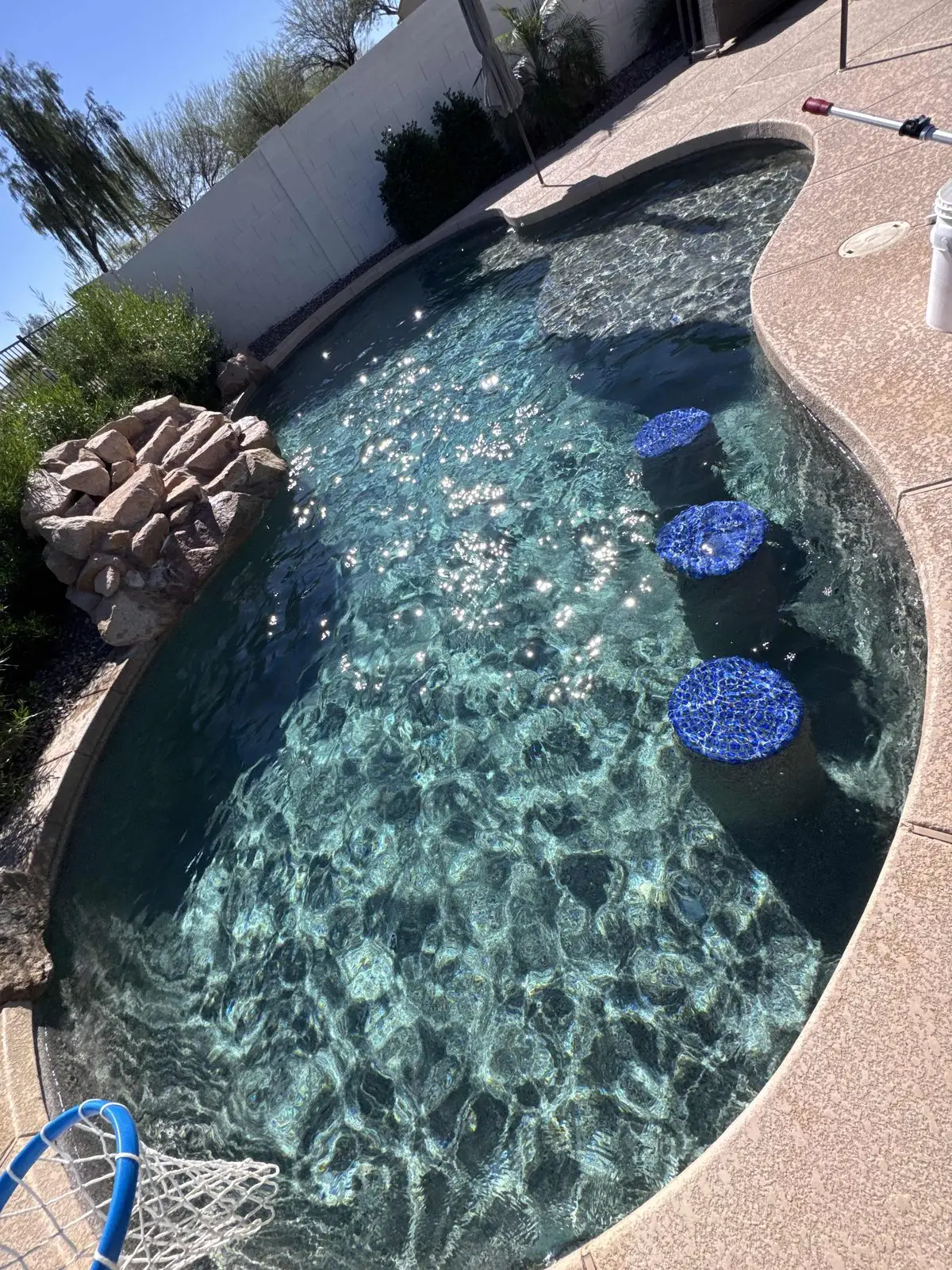
A pebble finish on a remodeled pool in Gilbert.
What a Fair Resurfacing Quote Should Include
- Draining the pool and following the city’s discharge rules (see below)
- Prep of the old surface, including chip-out where it’s loose
- The finish type and color, in writing
- Waterline tile and coping, or a clear note that they’re not included
- Startup chemicals, and who handles the first 28 days
- Warranty terms for the new finish
- Permits, if the job changes plumbing, gas or electrical
Best Time of Year to Resurface in Tempe
October through April is the easy window. An empty pool sitting in 110°F sun can crack plaster, which is why we warn against draining in summer in our green pool after a monsoon guide. Fresh plaster also sets fast in that heat, so a smooth finish is harder to get. Summer jobs still happen, but plan on a schedule built around the heat. On top of that, a fall or winter resurface means the pool is cured and ready before swim season.
Draining Your Pool in Tempe: What the City Expects
Your contractor should handle this, but it helps to know the rules. They come from the City of Tempe’s stormwater guidance for pools, spas and fountains.
- Test the water first. It should read zero chlorine and zero bromine, and be clear and free of debris.
- The preferred option is your own yard: desert landscape, lawn, a retention basin or a rocky area. Keep the water on your property, and move the hose often so water doesn’t pool and draw mosquitoes.
- You can drain into your home’s sewer cleanout. Use a pump under 12 gallons per minute, secure the hose so it can’t pop out, and watch for backups.
- Never drain or backwash into a storm drain or an alley.
- Residential pools under 35,000 gallons may drain to other rights-of-way with a pump of 1.5 HP or less, as long as it causes no flooding, damage or traffic hazard.
- Draining into a sewer manhole in the street is prohibited.
- For a pool over 35,000 gallons, or any commercial pool, call Tempe Environmental Services at 480-350-2678 for approval first.
Questions go to Tempe 311 at 480-350-4311. Rules can change, so a quick call before you drain is worth it.
The First 28 Days After New Plaster
How a new finish is treated in its first month matters as much as how it went on. The National Plasterers Council’s start-up guidance covers the basics:
- Fill with clean tap water, not softened or RO water.
- Brush the whole pool and test the water every day.
- Keep the heater off for 28 days.
- Hold off on salt and wheeled cleaners until the 28 days are up.
Skipping these steps is how a brand-new finish ends up streaked or stained. A good contractor will walk you through it, or handle it for you.
Tempe Pool Remodel FAQ
How long does pool plaster last in Arizona?
Does resurfacing fix cracks in a pool?
How much does it cost to resurface a pool in Tempe?
Is it better to resurface or remodel an older pool?
Do I need a permit to resurface a pool in Tempe?
When is the best time to resurface a pool in Tempe?
Related Reading
- Variable Speed Pool Pump: The Best Proven Way to Save in Gilbert
- Why Gilbert’s Hard Water Is Quietly Destroying Your Pool
- How to Remove Calcium From Your Pool Tile in Chandler, AZ
Not sure which fix your Tempe pool needs?
Blue Lagoon Pool Management will look at your pool and tell you straight whether it needs a resurface or a full remodel, with a clear quote.